



Introduction to Different Types of Microorganisms (Part One)
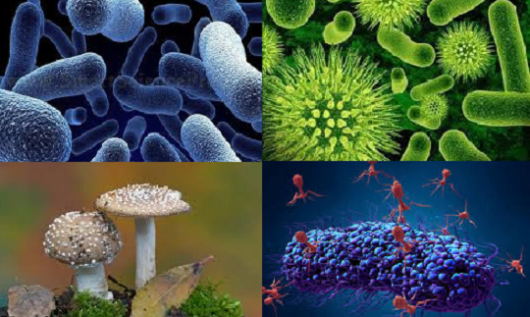
The term “microorganism” (or “microbe”) refers to a group of microscopic living organisms that includes bacteria, viruses, fungi, and protozoa. Microorganisms are extremely small and cannot be seen with the naked eye. They can only be observed using a specialized instrument called a microscope, which magnifies them hundreds or even thousands of times, making them visible. Many types of microorganisms can cause diseases in humans and other animals.
Like all living organisms, microorganisms require warmth, moisture, and nutrients to survive. They obtain these necessities from a variety of sources, including feces, garbage, food residues, and even the human body.
The human body naturally contains a vast number of microorganisms, many of which do not cause disease. In fact, some microorganisms are essential for maintaining normal bodily functions. For example, the intestines rely on certain beneficial bacteria to help digest food properly.
Many other microorganisms in the environment also perform valuable functions. For instance, Lactobacillus bacteria convert milk into yogurt, while numerous bacterial species help decompose plant material and produce compost.
Types of Microorganisms
1. Bacteria
Bacteria are single-celled microscopic organisms that obtain their nutrients from their surrounding environment.
They are incredibly small and cannot be seen without a microscope. To appreciate their size, consider that a single teaspoon can contain billions of bacteria. This means bacteria are even smaller than a grain of salt or the tip of a needle.
Bacteria exist in a wide variety of shapes. Some are spherical, some are comma-shaped, while others are rod-shaped, long, and slender. Certain bacteria are covered with hair-like structures called flagella, which enable them to move through their environment.
Some bacteria are beneficial because they help maintain a healthy digestive system and prevent harmful bacteria from colonizing the body. Others are used in the production of medicines and vaccines.
However, bacteria can also cause disease by infecting different parts of the body, including the urinary tract, ears, and throat (such as infections caused by Streptococcus bacteria). Antibiotics are commonly used to treat bacterial infections.
2. Viruses
Viruses are microorganisms that are even smaller than bacteria and are not considered complete living cells.
Simply put, viruses consist of genetic material (DNA or RNA) enclosed within a protein coat. Unlike bacteria, viruses cannot reproduce on their own. Instead, they depend entirely on living cells for replication. This means they must invade the cells of humans, animals, or plants in order to survive and multiply.
What Is the Purpose of a Virus?
Viruses can survive only for a short time outside living cells unless they find a suitable living host. Once they enter the human body, they can spread throughout various organs—depending on the type of virus—and cause disease.
Viruses are responsible for a wide range of illnesses, from mild infections such as the common cold and influenza, to serious and potentially life-threatening diseases such as smallpox and AIDS.
Some viruses enter a host cell and reproduce until the cell eventually bursts. The newly formed viruses are then released and go on to infect additional healthy cells.
Viruses are particularly challenging because they can mutate (change) rapidly, allowing them to adapt quickly to new environments.
Unlike bacterial infections, antibiotics are ineffective against viruses. In recent years, several antiviral medications have been developed, but they are effective only against a limited number of specific viruses.
The next article will discuss two additional groups of microorganisms: fungi and protozoa.